Requesting a Rubber Tyred Gantry (RTG) crane price quote may seem straightforward, but in practice, many buyers receive prices that are either incomplete, misleading, or difficult to compare. This usually happens because key technical and operational information is missing at the inquiry stage. Since RTG cranes are highly customizable machines, even small differences in specifications can lead to significant cost variations.
For first-time buyers and experienced procurement teams alike, understanding what information to provide, how pricing is structured, and how to evaluate quotations is essential for controlling budgets and avoiding costly revisions later. This guide explains, step by step, how to request an accurate rubber tyred gantry crane price quote that truly reflects your project needs.
1. Clearly Define Your Application Scenario
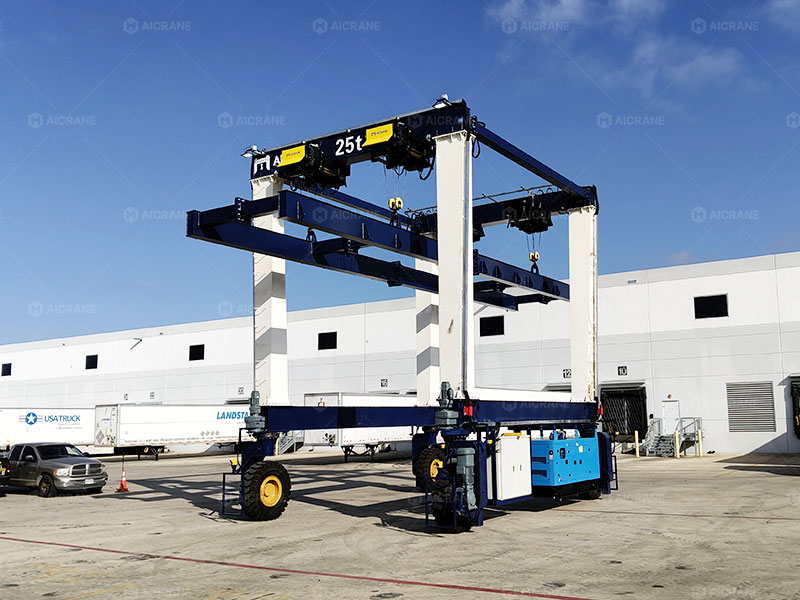
The first and most critical step is explaining where and how the RTG crane will be used. RTG cranes are no longer limited to container yards; they are widely used in steel fabrication plants, precast concrete yards, shipyards, and large logistics terminals.
When submitting a quote request, clearly state:
-
The industry (container handling, steel, concrete, logistics, etc.)
-
The type of loads (containers, steel coils, beams, molds, machinery)
-
Whether the mobile gantry crane will operate outdoors, indoors, or in mixed conditions
-
Expected daily operating hours and workload intensity
Why this matters:
Different applications require different structural strengths, duty classifications, corrosion protection levels, and safety systems. A vague description such as “general lifting” often leads to under-specified or over-priced quotations.
2. Specify Rated Capacity and Load Characteristics
The rated lifting capacity is one of the largest cost drivers for an RTG crane, but it must be defined correctly.
In your inquiry, include:
-
Maximum single-load weight (in tons)
-
Whether the load is uniform or eccentric
-
Load dimensions (length, width, height)
-
Any need for dual-hoist or tandem lifting
For example, lifting 40-ton steel coils with a compact center of gravity is very different from lifting 40-ton precast beams with long spans and high bending moments. These differences affect girder design, wheel loads, motor sizing, and overall cost.
Tip: Always quote based on the heaviest and most demanding load, not the average load.
3. Provide Span, Lifting Height, and Stacking Requirements
RTG crane geometry has a direct impact on steel structure weight and drive system configuration.
Your quote request should clearly state:
-
Span (clear distance between legs)
-
Lifting height (from ground to hook or spreader)
-
Required stacking rows and columns (especially for container or material yards)
-
Any cantilever requirements
Even a 1–2 meter difference in span or lifting height can significantly affect pricing. If your yard layout is not finalized, ask suppliers to quote two alternative configurations for comparison.
4. Describe Site Conditions and Ground Parameters
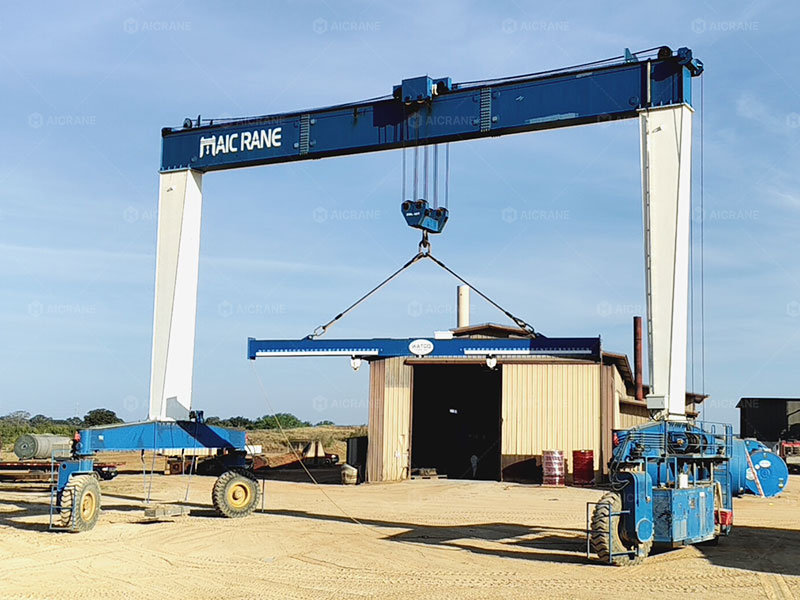
Unlike rail mounted gantry cranes, RTGs rely heavily on ground conditions for safe operation.
Include the following details:
-
Ground material (concrete, asphalt, compacted gravel)
-
Estimated ground bearing capacity
-
Flatness and slope tolerances
-
Presence of drainage channels, pits, or obstacles
-
Local wind conditions and seismic zone (if applicable)
Why this matters:
Ground conditions influence wheel load design, tire selection, suspension systems, and anti-skew measures. Without this data, suppliers either underestimate costs (leading to future change orders) or add conservative margins that inflate the price.
5. Clarify Mobility, Steering, and Travel Requirements
RTG cranes offer multiple steering and travel configurations, each with different cost implications.
In your request, specify:
-
Required travel speed (loaded and unloaded)
-
Steering mode: straight travel, crab steering, diagonal travel, or 360° rotation
-
Frequency of long-distance relocation within the site
-
Turning radius constraints
If your operation requires frequent repositioning across a large yard, advanced steering systems and reinforced frames may be needed, increasing the price but improving long-term efficiency.
6. Define Power Supply and Energy Preferences
Power configuration is another major variable in RTG pricing.
Clearly indicate:
-
Power source: diesel generator, cable reel, busbar, or hybrid
-
Local voltage and frequency
-
Fuel or electricity cost considerations
-
Emission or noise restrictions
Hybrid or electric RTGs usually have higher initial costs but lower operating expenses. If lifecycle cost matters to you, request separate quotations for different power options rather than a single price.
7. List Required Safety and Automation Features
Safety systems are not accessories—they are integral to RTG crane pricing.
Your inquiry should clarify whether you need:
-
Anti-sway systems
-
Overload protection
-
Wind speed alarms
-
Collision avoidance
-
Remote control or automation readiness
-
Operator cabin vs. ground control
Each added system affects electrical design, control software, and commissioning scope. A quote that excludes safety features may look attractive initially but can be misleading.
8. Request a Detailed Price Breakdown
An accurate RTG gantry crane quote should never be a single lump-sum number.
Ask suppliers to break down pricing into:
-
Steel structure
-
Hoisting and travel mechanisms
-
Electrical and control systems
-
Power system
-
Safety devices
-
Surface treatment and corrosion protection
-
Testing and inspection
-
Packing and delivery terms
This transparency allows you to compare quotations fairly and identify where cost differences truly come from.
9. Clarify Scope: What Is Included and What Is Not
Before accepting any quote, confirm:
-
Does the price include installation guidance or supervision?
-
Are commissioning and load testing included?
-
Are spare parts provided?
-
What is excluded (civil works, foundations, fuel, cables)?
Many disputes arise not from price, but from unclear scope definitions. A slightly higher quote with a clearer scope is often the safer choice.
10. Communicate Timeline and Commercial Terms
Finally, pricing is influenced by:
-
Required delivery time
-
Payment terms
-
Warranty duration
-
After-sales support expectations
Urgent delivery or extended warranties may affect cost. Make these expectations clear at the inquiry stage to avoid later renegotiation.
Conclusion: Accuracy Starts with Preparation
Requesting an accurate Rubber Tyred Gantry Crane price quote is not about finding the lowest number—it is about obtaining a technically correct, transparent, and comparable quotation. The more clearly you define your application, site conditions, and operational requirements, the more reliable the price will be.
By following the steps outlined in this guide, you can:
-
Avoid hidden costs
-
Reduce design revisions
-
Compare suppliers on equal terms
-
Make confident, data-driven purchasing decisions
An accurate quote is the foundation of a successful RTG crane investment—and it always starts with the right questions.